Published June 5, 2025
Yoruba Traditional Wedding: A Complete Guide to Idana
The Yoruba traditional wedding — known as Idana — is one of the most visually spectacular celebrations in West Africa. Rich with colour, music, dance, and ceremony, it is far more than a preamble to the white wedding. For many Yoruba families, the Idana is the real wedding. Here is everything you need to know.
What Idana Actually Means
Idana literally translates to "the tying of a knot" or "the sealing of a bond." It is the formal presentation of a groom and his family to the bride's family, the payment of bride price (eru iyawo), and the official consent of both families to the union. In Yoruba culture, a marriage is not between two individuals — it is between two families. The Idana is where those families formally meet, negotiate, and agree.
Key Items on the Bride Price List
The groom's family presents a list of items to the bride's family in advance. While the contents vary by family and state — Lagos, Ogun, Osun, Oyo, Ekiti, Ondo, Kwara, and Kogi all have regional variations — common items include bitter kola, kola nut, alligator pepper, honey, schnapps, fabrics for the bride's mother and key female relatives, a Bible or Quran depending on the family's faith, and cash in a decorated envelope. The specific list is sent beforehand and returned annotated with what was accepted. This back-and-forth is a formal ritual — do not improvise on the day.
The Prostration (Dobale)
One of the most visually striking moments of the Idana is when the groom prostrates fully on the floor before the bride's parents and elders. This is dobale — a full-body bow showing deep respect. It is not optional. The depth and sincerity of the prostration is noted by the family and signals the character of the man their daughter is marrying. Female members of the groom's family kneel (ikunle).
The Wine Carrying Ceremony
After the bride price has been paid and accepted, the bride is brought out — often dramatically, to music, escorted by her friends in matching aso-ebi. She carries a calabash or glass of palm wine and must find her groom among all the seated men. When she finds him, she kneels and offers him the drink. He sips it, then pours a libation. This moment is the climax of the Idana and is almost always met with celebration from both families.
What to Wear
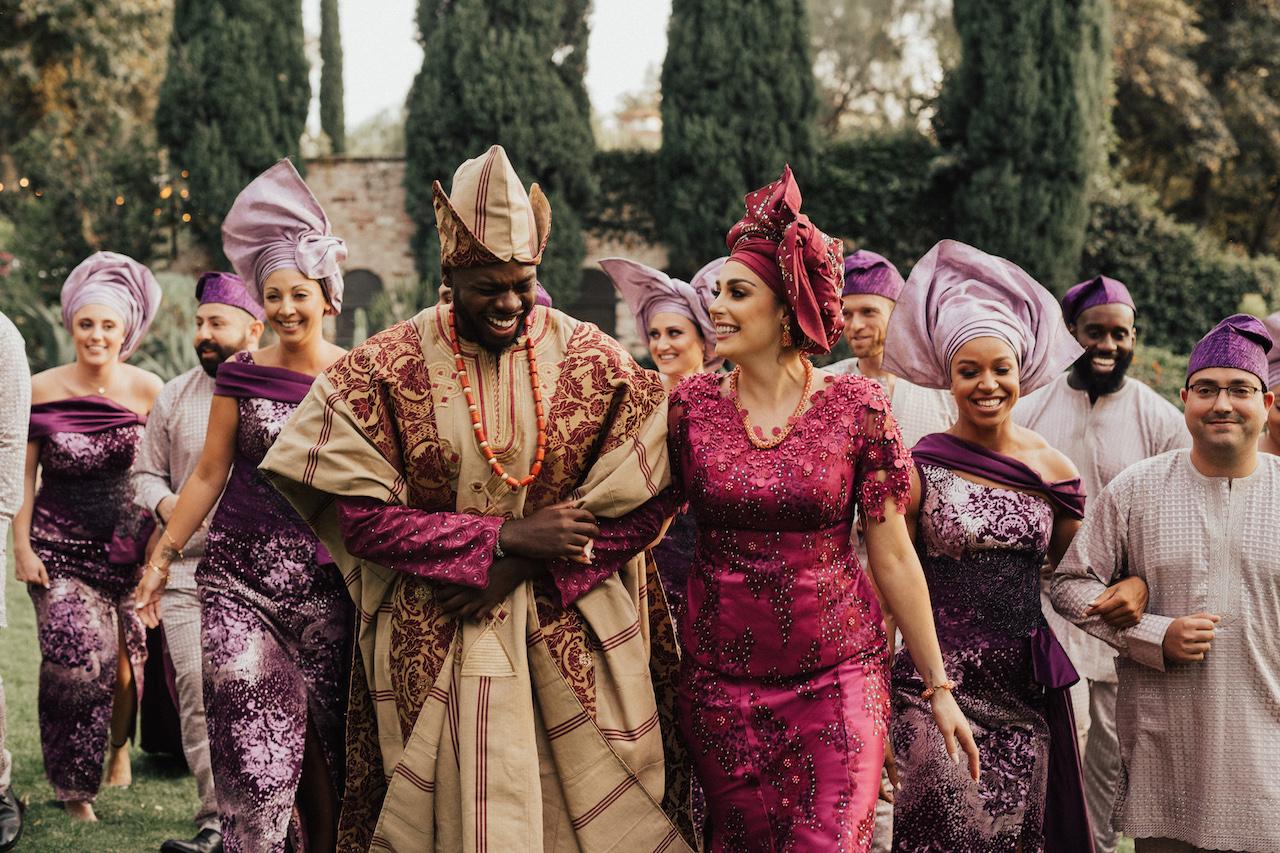
The bride typically wears aso-oke — a handwoven fabric in the family's agreed colour — styled into a gele (headwrap), buba (blouse), iro (wrapper), and ipele (shawl). The groom wears agbada or a simpler sokoto and buba combination. Both families typically agree on an aso-ebi colour so guests can be identified by family.
Music and Entertainment
Fuji, juju, or sakara music is traditional for the Idana, often performed live by a professional band or talking drum ensemble. An MC — alaga iduro for the groom's side, alaga ijoko for the bride's side — manages the proceedings with humour and cultural knowledge. The two alaga are often the most entertaining part of the day.
Find wedding venues for your Idana across Nigeria on JoyRibbons.
More Venue Photos
%2Fimage_1_1976_image_1976.jpg&w=1920&q=75)
%2Fimage_2_1976_image_1976.jpg&w=1920&q=75)
📷 Venue images are sourced from Google Maps / Google Images for illustrative purposes only. JoyRibbons does not own these images. All rights belong to their respective owners.
Keep Reading
Related Stories
Why Nigerian Couples Feel Awkward Asking for Wedding Gifts (And How to Get Over It)
Registries still carry a stigma in Nigeria — seen by some as greedy or un-African. Here's where that discomfort comes from, and why it's already starting to lose its grip.
Read moreCash or Physical Gifts? What Nigerian Couples Actually Prefer in 2026
Money spraying, envelope gifts, household items — Nigerian weddings have always run on a mix. Here's an honest breakdown of when each actually makes sense.
Read moreHow Much Should You Actually Spend on a Nigerian Wedding Gift?
There's no fixed rule, but there are real benchmarks. A practical, honest guide for guests trying to figure out what's appropriate.
Read more