Published June 2026
Lace, Aso-Oke, and Sequins: An Honest Guide to Nigerian Bridal Fabric Choices
Bridal fabric choice in Nigeria carries more practical weight than it might first appear — between Nigeria's climate, the typical multi-event structure of a wedding (trad and white, sometimes on consecutive days), and the distinct visual languages of different traditional fabrics, the "right" choice depends on more than which one simply looks best in a photo.
Aso-oke
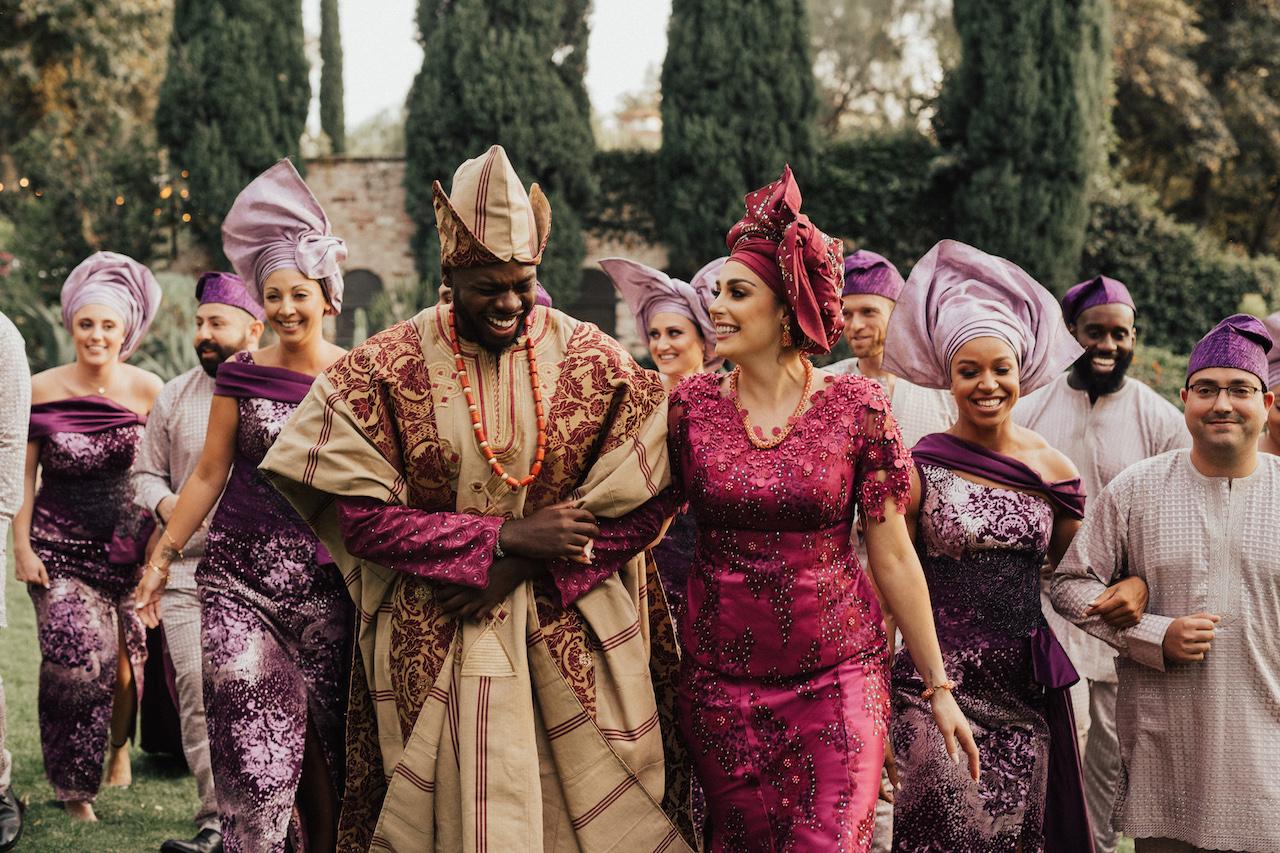
Hand-woven and structurally distinct, aso-oke has real visual texture and weight, making it a strong choice for the traditional ceremony specifically, where its cultural and visual associations carry real meaning. It tends to hold structured shapes — including structured gele — very well, but it's also a warmer, heavier fabric, worth factoring into comfort planning for a long, multi-hour outdoor or non-air-conditioned ceremony.
Lace
Lighter and more breathable than aso-oke, lace remains a dominant choice across both traditional and white wedding attire, partly because of its sheer versatility — it photographs beautifully, drapes well in a range of silhouettes, and comes in price points spanning a genuinely wide range, making it accessible across different budgets in a way some other traditional fabrics aren't.
George fabric
Particularly associated with Igbo traditional bridal wear, george fabric has a distinct stiffness and richness that holds its shape dramatically, especially paired with coral beads and a structured headpiece. Like aso-oke, it's a heavier fabric — a real consideration for comfort during a long ceremony or in particularly warm weather.
Sequinned and embellished fabrics
Increasingly common for the white wedding or reception specifically, heavily embellished and sequinned fabrics lean into the more produced, photograph- and video-forward aesthetic that's become standard at modern receptions — they catch light dramatically under reception lighting and photography flash in a way matte traditional fabrics don't. The tradeoff is comfort and weight; a heavily embellished gown can be considerably less comfortable for hours of dancing than a simpler fabric.
The honest, practical approach
Rather than choosing fabric purely on appearance, it's worth matching the fabric to the specific event it's for: heavier, more structured fabrics like aso-oke or george for the traditional ceremony, where their visual and cultural weight matters most and the event is often shorter; lighter, more comfortable options for the longer reception where you'll be dancing, changing outfits, and on your feet for hours. Comfort across a genuinely long wedding day is a real, practical factor that's easy to underweight when choosing fabric purely from photos.
Keep Reading
Related Stories
6 Aso-Ebi Colour Combinations Nigerian Brides Are Actually Choosing in 2026
Emerald and gold. Wine and champagne. Royal blue and silver. Here's an honest, practical breakdown of the colour pairings actually dominating Nigerian traditional weddings this year — and how to choose between them.
Read moreGarden Weddings in Nigeria: What the Aesthetic Actually Looks Like Beyond the Pinterest Board
Pampas grass, earth tones, and natural light have become the signature look of the Nigerian garden wedding. Here's what actually defines the aesthetic, and what to consider before choosing it.
Read moreThe Gele Is Having a Moment — A Style Guide to What's Actually Trending
From structured architectural shapes to softer draped styles, the gele has evolved well beyond a single traditional silhouette. Here's an honest guide to what's actually being worn.
Read more