Published June 2026
Owambe Culture Is Changing, Whether or Not Anyone Wants to Admit It
Nigerian wedding receptions — owambe, the loud, joyful, all-out celebration that follows the more solemn parts of the day — have always leaned toward spectacle. But the specific shape of that spectacle has visibly shifted over the past year or two, and it's worth naming the actual changes rather than just gesturing at "things are more extra now."
The colour palette has gotten bolder
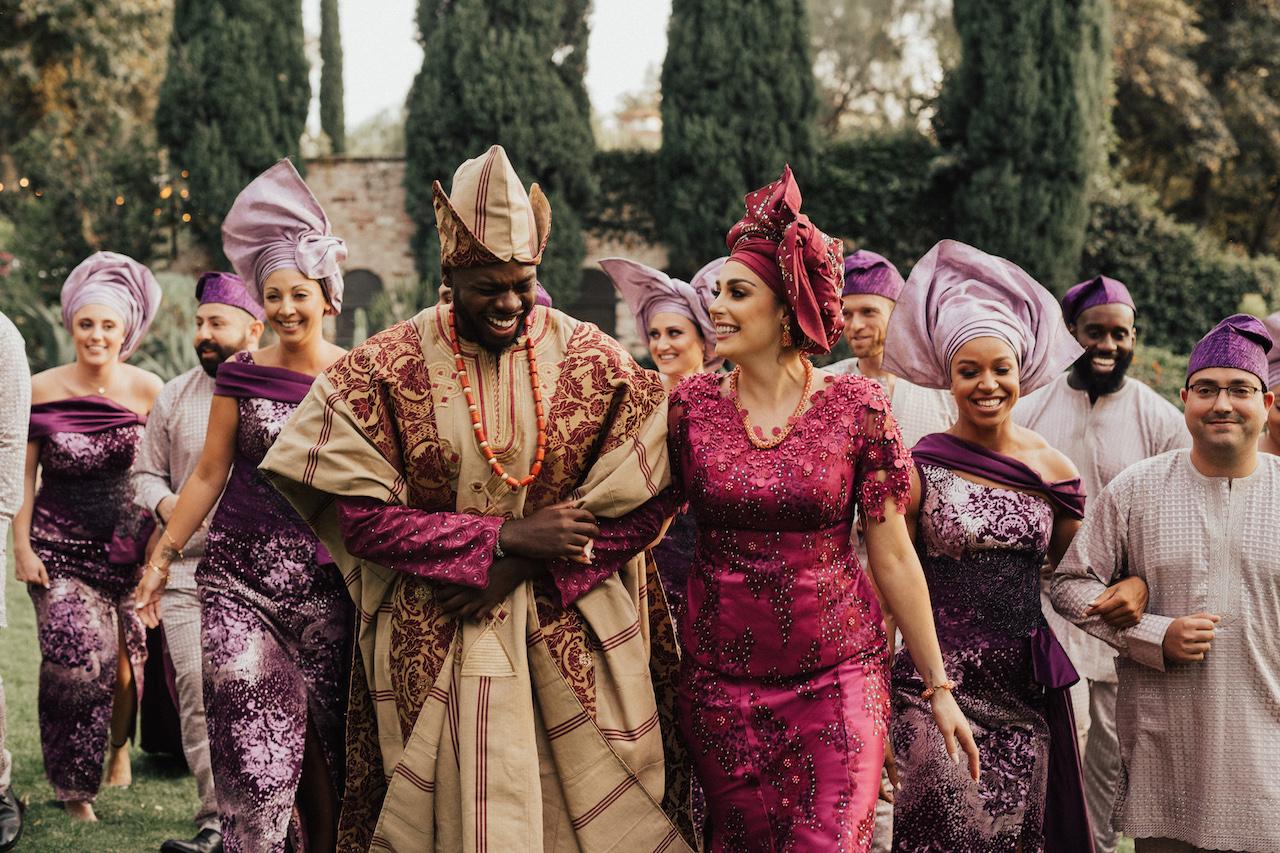
Softer, more muted palettes have noticeably taken a backseat to rich, vibrant shades — emerald green, burnt orange, champagne gold, deep wine, royal blue — both in aso-ebi fabric choices and in overall décor schemes. This isn't a subtle shift; it's a fairly decisive move away from the pastel-and-cream aesthetic that dominated for a stretch of years before it.
The reception has become a genuine production, not just a party
Grand, choreographed entrances, LED dance floors, light shows, and live performances have become increasingly standard rather than exceptional — guests are now arriving with the expectation of a full show, not just a reception with dancing. Multiple outfit changes throughout the night, once reserved for the most extravagant celebrations, are becoming a more routine part of the format. Bridal trains in particular have shifted role — bridesmaids aren't simply standing in support beside the bride anymore, they're an active, often choreographed part of the visual experience and entrance itself.
Even the cake has become a decor element, not an afterthought
The single large fondant cake sitting quietly in a corner of the room has largely given way to cakes designed with the same intentionality as the rest of the décor — texture, colour, and design chosen specifically to function as a visual piece in the room, not just dessert waiting to be served.
What this is actually a response to, in our honest read
Some of this shift is straightforwardly about social media — a wedding reception that's genuinely photogenic and shareable gets a different kind of life online than one that isn't, and couples planning in 2026 are, whether they say so explicitly or not, planning with that audience in mind alongside the guests actually in the room. That's not necessarily a criticism — it's simply an honest acknowledgment of an incentive that didn't exist at this scale a decade ago, and it's shaping real, visible choices in how receptions are designed.
The tension worth naming
A more produced, performance-oriented reception costs more, in money and in planning complexity, than the version it's replacing — and that cost increase is happening at the same time plenty of couples are also actively looking for ways to cut wedding spend overall. Both trends are real and happening simultaneously in Nigerian weddings right now; which one wins out for any individual couple seems to come down less to taste and more to budget reality and how much family pressure exists either way.
Keep Reading
Related Stories
Garden Weddings in Nigeria: What the Aesthetic Actually Looks Like Beyond the Pinterest Board
Pampas grass, earth tones, and natural light have become the signature look of the Nigerian garden wedding. Here's what actually defines the aesthetic, and what to consider before choosing it.
Read moreEvery Wedding Now Has a Drone Shot — Is That Actually a Good Thing?
Aerial drone footage has gone from a luxury add-on to a near-default expectation at Nigerian weddings. An honest look at whether it's worth the cost for most couples.
Read moreThe "Micro-Wedding" Trend Doesn't Really Work for Nigerian Couples — Here's Why
International wedding trend reports keep predicting smaller, more intimate weddings for 2026. For most Nigerian couples, that's not really an option — and that's worth being honest about.
Read more