Published June 2026
Should You Let AI Write Your Wedding Vows? Here's an Honest Answer
AI use in wedding planning has grown sharply — Zola's 2026 First Look Report found 54% of engaged couples now use AI somewhere in their planning process, up 150% from the year before. One of the more debated specific uses is vow-writing, and it's worth a genuinely honest answer rather than either dismissing it outright or pretending there's no real downside.
Why people are turning to it
Writing vows is genuinely hard for most people — condensing years of feeling into a few hundred words you'll say out loud, in public, in front of everyone who matters to you, is a task most people have never had to do before and won't do again. It's reasonable that a tool which can help organise thoughts or get past a blank page would be appealing, and several wedding-industry tools now exist specifically built around helping couples structure and polish vows.
Where it genuinely helps
AI is well suited to the structural, unblocking parts of vow-writing: organising scattered thoughts into a coherent flow, suggesting a way to open or close, helping turn a rough draft into something that reads more smoothly out loud, or simply getting you past the intimidation of a blank page. Wedding professionals who use these tools with clients tend to describe this kind of support — polishing and structuring — as the genuinely useful application.
Where it tends to go wrong
The risk isn't really that AI-assisted vows are detectable or "fake" — it's that generic AI output, without enough specific personal detail fed in, tends to produce vows that could plausibly be read at anyone's wedding. Vows work because of their specificity — the particular memory, the particular inside joke, the particular thing only this couple would say to each other. An AI tool with nothing to work from beyond "write me wedding vows" will produce something competent and completely generic. The same tool, given real specific details and asked to help organise and polish them, can produce something genuinely useful.
There's a broader caution worth carrying into any AI-assisted wedding planning, not just vows: AI can sound confident while being wrong in ways a first-time wedding planner has no way to catch — a budget breakdown with unrealistic line-item costs, or a "recommended vendor" that turns out not to exist or isn't actually who they're claimed to be. The same caution applies to vows: read them out loud, make sure every line actually sounds like something you'd say, and treat AI output as a draft to heavily personalise, not a finished product.
Our honest take
Used as a structuring and editing tool, with real personal detail fed in and a genuine final pass to make sure it sounds like you, AI for vow-writing is a reasonable, increasingly common choice — not something to be embarrassed about. Used as a substitute for actually thinking through what you want to say, it tends to produce something technically fine and emotionally forgettable. The difference isn't really about the tool — it's about how much of yourself you put into using it.
Keep Reading
Related Stories
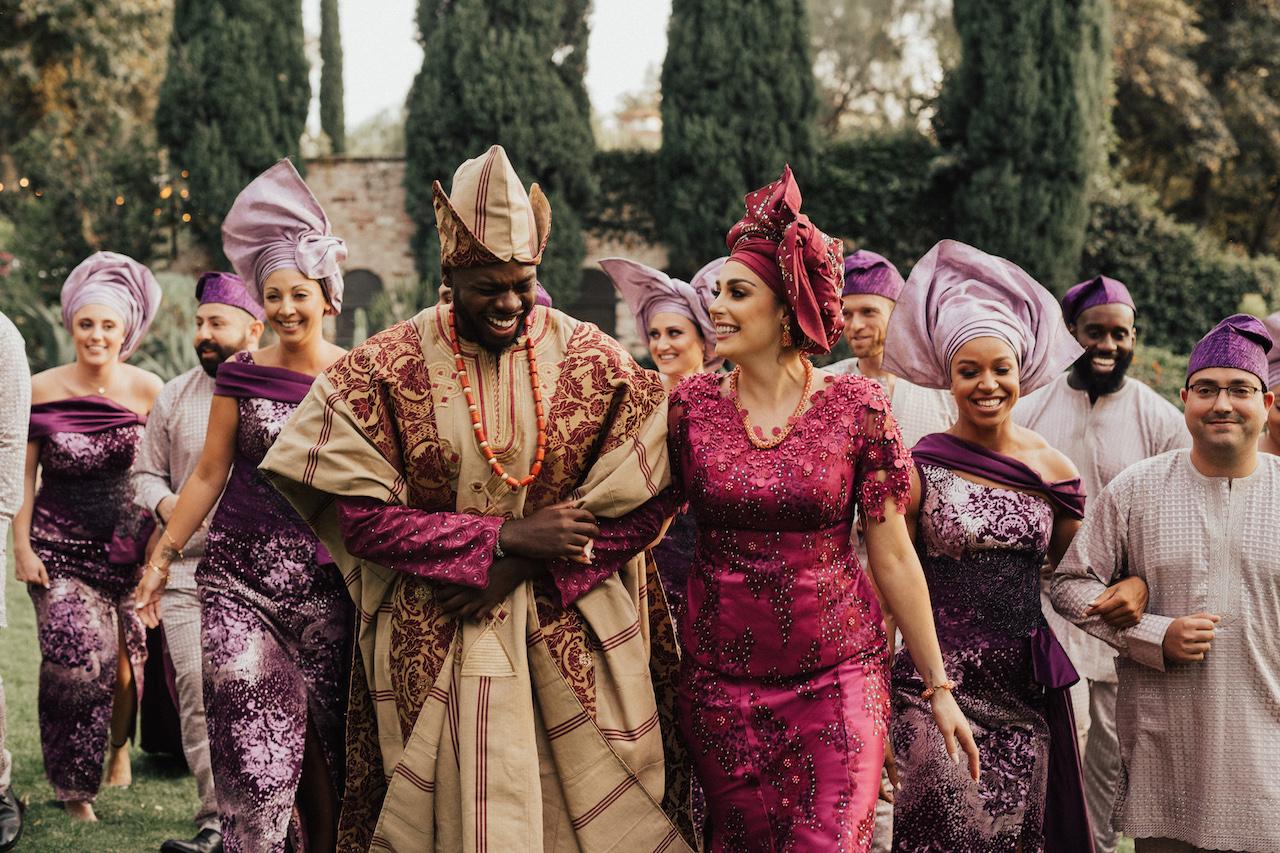
The Wedding Content Creator Is Now a Standard Vendor — Here's Why Photographers Are Uneasy About It
Hiring a separate 'content creator' alongside your photographer and videographer has quietly become standard at Nigerian weddings. Not everyone in the industry is thrilled about it.
Read moreThe "Micro-Wedding" Trend Doesn't Really Work for Nigerian Couples — Here's Why
International wedding trend reports keep predicting smaller, more intimate weddings for 2026. For most Nigerian couples, that's not really an option — and that's worth being honest about.
Read moreDigital Wedding Invitations Are Winning in Nigeria — And the Reason Isn't Just Cost
Printed Nigerian wedding cards can cost ₦100,000 or more. That's part of why digital invitations are spreading fast — but it's not the whole story.
Read more