Published June 2026
Digital Wedding Invitations Are Winning in Nigeria — And the Reason Isn't Just Cost
Printed Nigerian wedding invitation cards — the kind with gold foil, elaborate typography, and a couple's photo embossed on heavy cardstock — can easily run ₦100,000 or more depending on quantity and design, and that cost is a real, frequently cited reason couples are switching to digital invitations instead. But cost is only part of why the shift is happening, and the rest of the reason is worth naming honestly.
The obvious driver: cost, at scale
Given how large Nigerian wedding guest lists typically run, the printed-card cost multiplies fast — a few hundred physical invitations at a premium per-unit price adds up to a genuinely significant line item in the overall budget, before a single chair or plate of food is paid for. Switching to digital removes that cost almost entirely.
The less-discussed reason: it's just how people actually communicate now
The more honest second reason is simpler than a cost calculation: most guests genuinely prefer digital invites at this point, because that's how they receive nearly everything else important in their lives — flight confirmations, event reminders, even formal correspondence increasingly arrives by phone, not post. A beautifully printed card that sits unopened in a drawer is, for a meaningful share of recipients, less functional than a WhatsApp message with the date, location, and a tap-to-RSVP link built in.
What this means practically
A well-designed digital invitation does everything a printed card does — sets the tone, signals the formality level, communicates the key details — while adding things a printed card structurally can't: a live RSVP count, an easy way to share location and directions, and the ability to update details if something changes without reprinting anything. For a Nigerian wedding specifically, where the guest list is often large and partly indirect (the friend of a cousin, the colleague of an aunt), the easy shareability of a digital invite — forward this link — also genuinely solves a real distribution problem printed cards never could.
What's actually being lost, and whether it matters
It's fair to acknowledge something real does change with this shift — there's a tactile, ceremonial quality to receiving a physical, beautifully designed card that a digital link doesn't replicate, and some older relatives genuinely prefer and expect the printed version as a mark of proper formality. The honest middle ground many couples are landing on: a small run of printed cards for close family and elders who expect them, paired with digital invitations for the much larger broader guest list — keeping the ceremonial gesture where it matters most, without paying the full printed cost across hundreds of guests.
Keep Reading
Related Stories
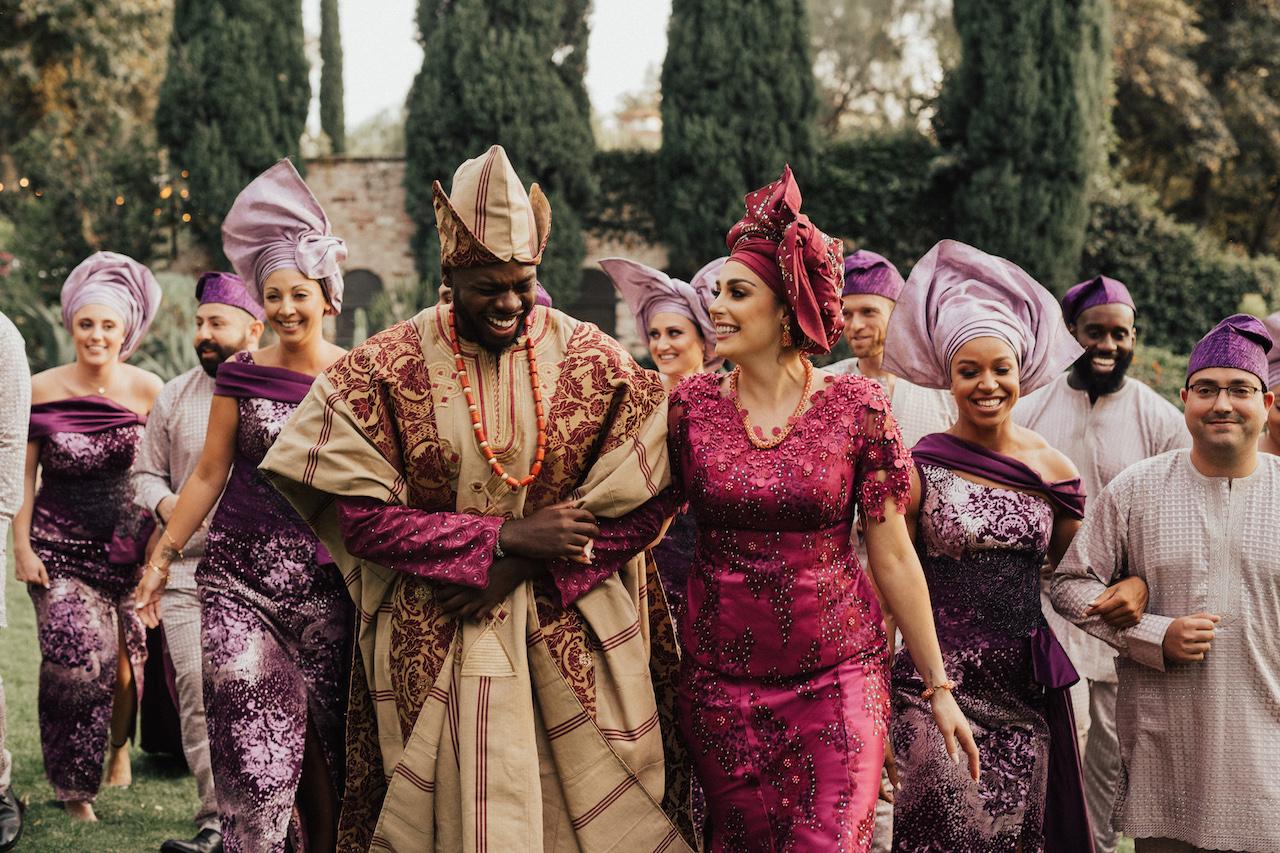
The "Micro-Wedding" Trend Doesn't Really Work for Nigerian Couples — Here's Why
International wedding trend reports keep predicting smaller, more intimate weddings for 2026. For most Nigerian couples, that's not really an option — and that's worth being honest about.
Read moreShould You Let AI Write Your Wedding Vows? Here's an Honest Answer
54% of engaged couples now use AI somewhere in their wedding planning. Vow-writing is one of the most common — and most debated — uses. Here's where it genuinely helps and where it doesn't.
Read moreOwambe Culture Is Changing, Whether or Not Anyone Wants to Admit It
Bold colours, choreographed bridal train entrances, multiple outfit changes, full-on reception productions — Nigerian wedding receptions in 2025-2026 have visibly shifted in tone. Here's what's actually different.
Read more