Published June 2026
Why Western Brides Wear White: The Real History (It's Not What You Think)
The white wedding dress feels timeless — so embedded in the idea of "a wedding" that it's easy to assume it's always been this way. It hasn't. The tradition, as widely practiced today, traces back to a single, well-documented event in 1840, and the real story behind it has very little to do with purity.
Before 1840: brides wore whatever they could afford
For centuries before Queen Victoria's wedding, brides — including wealthy and royal ones — simply wore their best dress, in whatever colour that happened to be: gold, blue, deep red. White was occasionally worn by those who could afford it, but it wasn't a default or an expectation, and most brides married in colour.
What actually happened in 1840
When Queen Victoria married Prince Albert, she chose a white satin gown trimmed with Honiton lace and orange blossom — and the choice was driven by practicality and patriotism as much as romance. As head of state, Victoria specifically wanted to support England's struggling lace industry, and white was simply the best colour to showcase the delicate handmade Honiton lace she'd commissioned. She broke from the heavily bejewelled royal tradition deliberately, framing the day as a personal marriage rather than a state occasion.
How one royal wedding became a global default
The dress alone wouldn't have spread the trend — what did was the rise of mass-circulation magazines in the mid-nineteenth century, which described and illustrated Victoria's gown in vivid detail to a growing audience of middle-class women across the Western world. The "purity" symbolism widely associated with the white dress today was largely a later addition, layered onto the trend after the fact by Victorian-era publications rather than being Victoria's original intent.
Why this matters for African weddings specifically
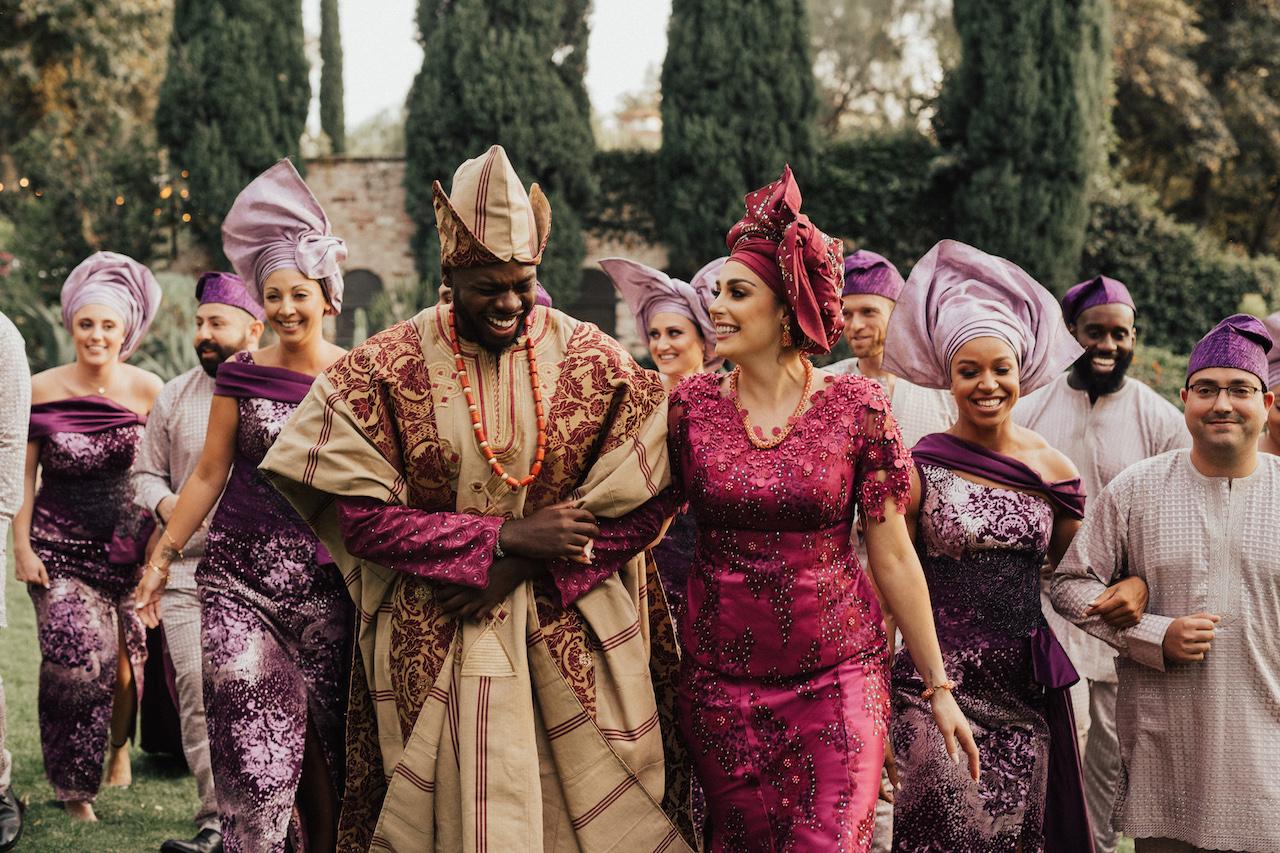
Understanding the white dress as a relatively recent, specifically European invention — not an ancient or universal custom — reframes something worth sitting with: when a Yoruba, Igbo, Zulu, or Akan couple has both a traditional ceremony and a white wedding, they're not adding a "modern" layer onto an "ancient" one. They're combining two traditions of genuinely comparable age — many African ceremonial customs are documented well before 1840, in some cases considerably older — rather than one being authentically old and the other a recent Western import grafted on top. The white wedding is, historically speaking, also just a 19th-century invention that happened to spread globally through the reach of the British Empire and print media.
The honest footnote
It's worth being precise rather than overstating Victoria's role: she's often credited as the sole originator of the white wedding dress, which historians generally consider an oversimplification — white had been worn by some earlier brides, including in ancient Egyptian, Greek, and Roman dress. What Victoria's wedding genuinely did was turn an occasional choice into a near-universal Western expectation, through the specific combination of her position, the moment, and the new reach of print media.
Keep Reading
Related Stories
The Real History of Money Spraying — And Why It's Technically Illegal
Money spraying dates back over a century to Yoruba praise-singing traditions. It's also, on paper, against Central Bank of Nigeria regulations. Here's the full, slightly contradictory story.
Read moreWhy Igbo Hospitality Starts With a Kola Nut — Not Food or Drink
In Igboland, the kola nut isn't just a snack offered to guests — it's a ritual object with its own language, prayers, and rules. Here's what it actually means.
Read moreThe Engagement Ring Wasn't Always About Love — Here's What It Actually Meant
Long before diamonds, the engagement ring was a Roman legal instrument, not a romantic gesture. The real history is less sentimental than the marketing — and more interesting.
Read more