Published June 2026
Lobola, Umembeso, Umabo: Understanding a Zulu Wedding's Three Stages
In Zulu culture, a marriage isn't marked by a single ceremony — it moves through a sequence of distinct stages, each with its own name, purpose, and required participants. Understanding the order, and what each stage actually does, makes the whole process much easier to follow if you're attending or marrying into a Zulu family.
Stage one: Lobola
Lobola is the negotiation and payment of bride wealth — traditionally cattle, though cash equivalents are now common. It's conducted by representatives called abakhongi, usually senior male relatives of the groom, who carry the family's reputation into the negotiation. This is not regarded as "buying" the bride; it's understood as the groom demonstrating his capacity to support her and formally honouring her family. In some understandings, once lobola is paid in full, the marriage already carries real legal and cultural weight — even before any further ceremony takes place.
Stage two: Umembeso
Following lobola, umembeso is a gift-giving ceremony at the bride's family home, where the groom's family presents items — blankets, grass mats, and other gifts — to the bride's relatives as a public, formal thank-you for raising her. A reciprocal ceremony called umbondo sometimes follows, where the bride's family brings groceries and household goods to the groom's side, creating a balance of giving in both directions rather than a one-way exchange.
Stage three: Umabo
Umabo is the traditional wedding itself, held at the groom's family home. The bride leaves her family home early in the morning, covered in a blanket given by her mother, and is not meant to look back as she departs — a deliberate symbolic break from her old home as she steps into her new one. At the groom's home, she distributes gifts — grass mats, blankets, beer pots, pieces of furniture — to specific people on his side, each name called out individually, while she sits on a grass mat and refrains from speaking, out of respect, as her bridesmaids hand the gifts out on her behalf.
Why most Zulu couples still complete all three stages
Most Zulu couples today also have a Western-style white wedding, but it's widely understood that the white wedding alone doesn't constitute a complete marriage in Zulu custom — umabo is considered essential, and some hold the belief that skipping it can invite real difficulty in the marriage. Where cost makes a full traditional wedding difficult, families sometimes hold it later, even after one or both spouses have passed, with descendants standing in as proxies — a sign of just how seriously the completion of all three stages is taken, independent of timing.
The throughline
What ties lobola, umembeso, and umabo together is a consistent logic: each stage is a formal, witnessed act of respect and reciprocity between two families, not a single couple's private decision. Together they tell the story of two households gradually, deliberately becoming one.
Keep Reading
Related Stories
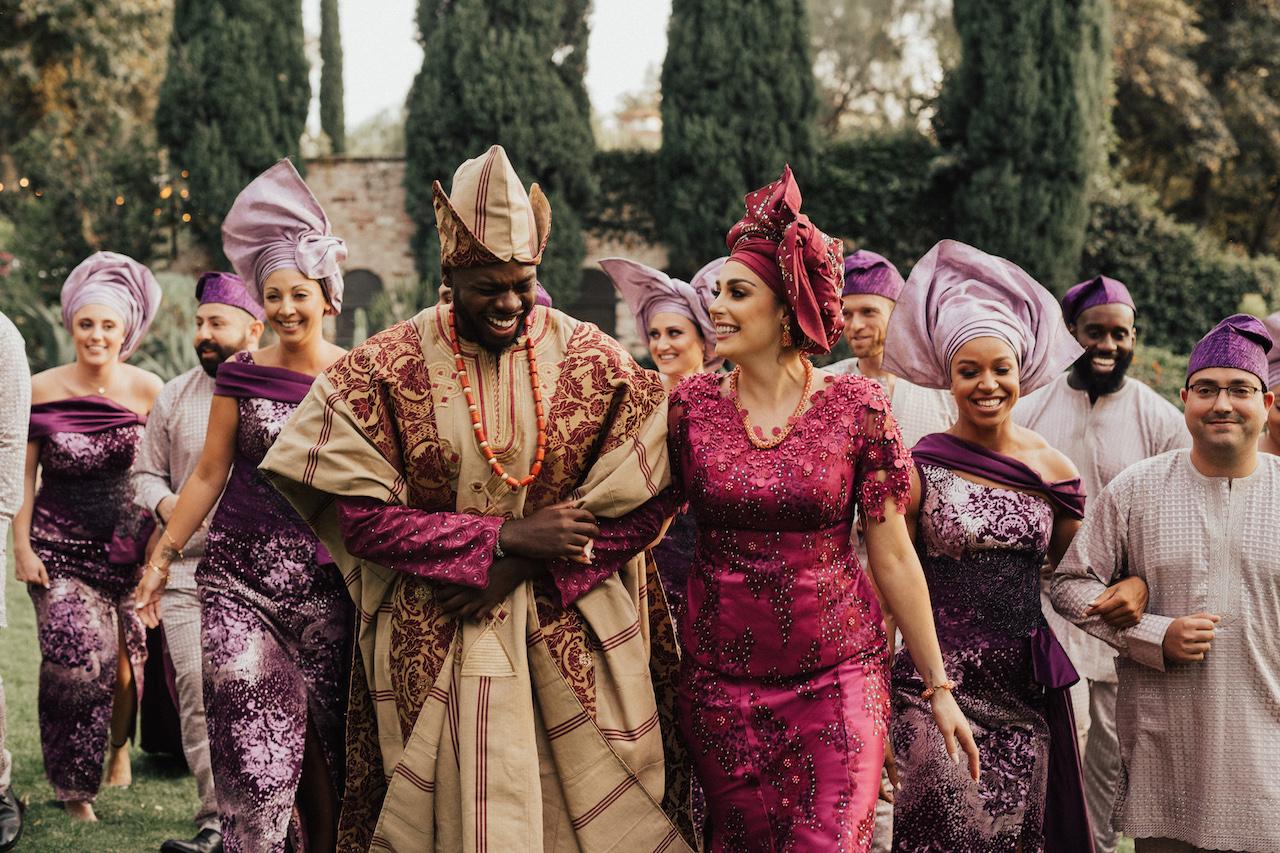
Yoruba, Igbo, or Hausa-Fulani? How Nigeria's Three Largest Traditional Weddings Actually Differ
Idana, Igba Nkwu, and Kamu/Fatiha are three genuinely distinct traditions, not regional variations on one Nigerian wedding. Here's how they compare, side by side.
Read moreKenya's Weddings Aren't One Tradition — They're Dozens. Here's a Guide to the Major Ones
There's no single "Kenyan wedding." With over 40 distinct communities, the Kikuyu ngurario, Luo dowry customs, and Maasai ceremonies are each their own tradition.
Read moreThe Knock, the List, and the Kente: A Guide to Ghanaian Wedding Traditions
Ghanaian weddings unfold in distinct acts, starting with a literal knock on the door. Here's what each stage means, and why the order matters.
Read more