Published June 2026
Yoruba, Igbo, or Hausa-Fulani? How Nigeria's Three Largest Traditional Weddings Actually Differ
"Nigerian wedding traditions" is a phrase that hides more than it reveals. Nigeria's three largest ethnic groups — Yoruba, Igbo, and Hausa-Fulani — each have their own distinct traditional wedding, with different names, different ceremonies, and different underlying logic. We've covered each in full detail elsewhere on JoyRibbons (Idana, Igba Nkwu, and Kamu/Fatiha); this is the side-by-side comparison, for anyone trying to understand how they actually differ rather than treating "Nigerian wedding" as one thing.
The central ceremony: wine versus formal contract
Both Yoruba Idana and Igbo Igba Nkwu centre on a wine-carrying moment — the bride searching the crowd for her groom and presenting him with palm wine as a public, active declaration of her choice. The staging differs in detail between the two cultures, but the underlying gesture — the bride's visible, witnessed consent — is shared.
Hausa-Fulani weddings work on an entirely different logic. As an Islamic tradition, the marriage is formalised through the Fatiha — a religious contract conducted by an Imam, with the Kamu (the broader set of pre-wedding and wedding customs) built around it. There's no wine-carrying ceremony here; consent and formalisation happen through a religious and legal process rather than a public symbolic search.
Who leads the ceremony
Yoruba weddings are run by two female MCs — the Alaga Iduro and Alaga Ijoko — whose narration and humour shape the entire event. Igbo ceremonies lean more heavily on the umunna, the bride's extended patrilineal family, with elders speaking and pouring libations to formally approve the union. Hausa-Fulani weddings centre religious leadership — an Imam presiding over the Fatiha — alongside family elders managing the surrounding customary events.
Attire: each instantly recognisable, none interchangeable
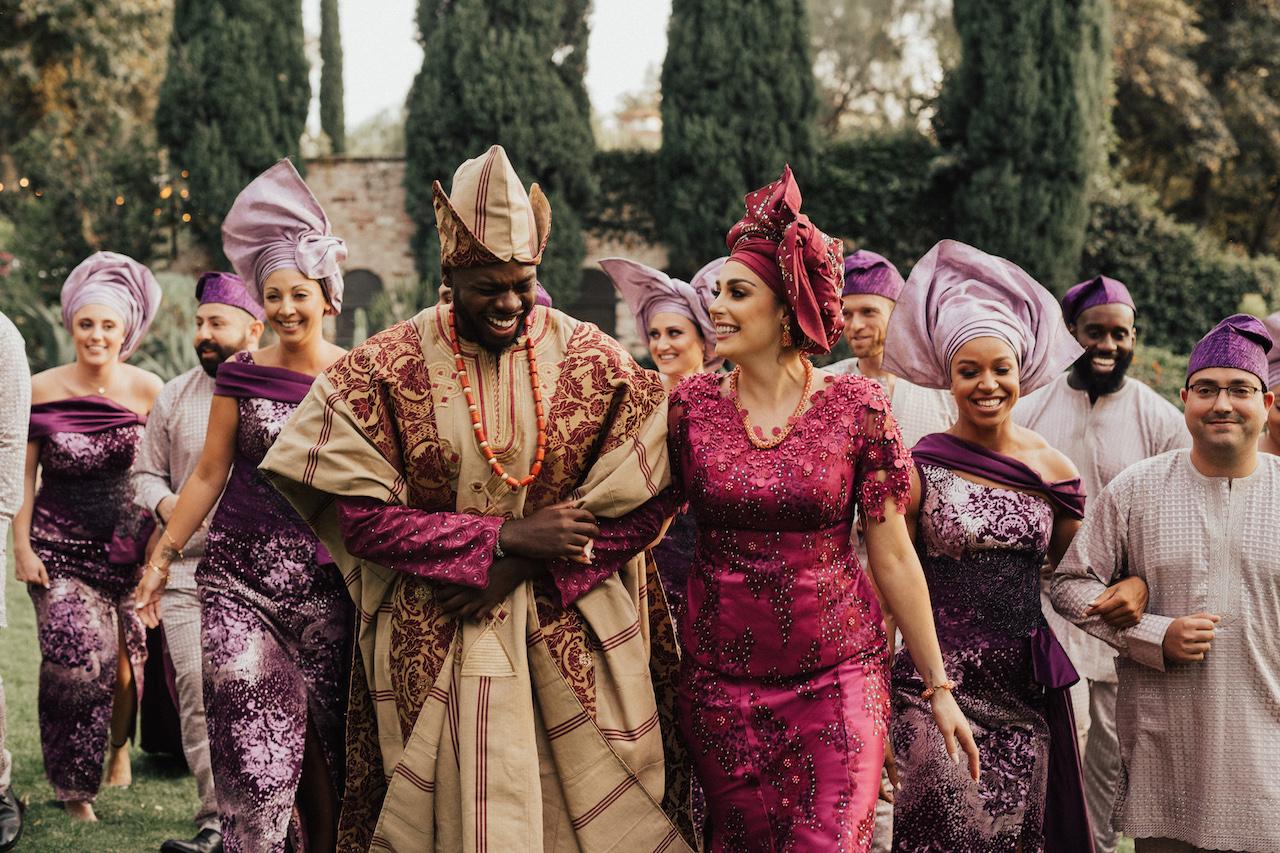
A Yoruba bride in aso-oke and gele, an Igbo bride in george fabric with coral beads, and a Hausa-Fulani bride in attire reflecting Islamic dress customs are each visually distinct enough that Nigerians can usually identify the tradition at a glance. None of these are minor stylistic variations on each other — they're separate sartorial traditions with their own materials, history, and rules.
Bride price: similar concept, different specifics
All three traditions involve some form of bride price presented by the groom's family, but the specific items, terminology, and negotiation process differ — eru iyawo in Yoruba custom, ime ego in Igbo custom, and dowry obligations under Hausa-Fulani and Islamic tradition each carry their own expected items and process, and even within each group, specifics shift by state and family.
Why this matters for anyone planning or attending
If you're marrying into a different ethnic tradition than your own, or attending a colleague's wedding outside your own background, the respectful starting point is recognising that these are genuinely separate traditions — not asking "what's the Nigerian way" but asking specifically which of these three (or one of Nigeria's many other ethnic traditions) the family follows. For the full detail on any one of them, our dedicated guides to Yoruba Idana, Igbo Igba Nkwu, and Hausa-Fulani Kamu and Fatiha go step by step through each.
Keep Reading
Related Stories
Kenya's Weddings Aren't One Tradition — They're Dozens. Here's a Guide to the Major Ones
There's no single "Kenyan wedding." With over 40 distinct communities, the Kikuyu ngurario, Luo dowry customs, and Maasai ceremonies are each their own tradition.
Read moreLobola, Umembeso, Umabo: Understanding a Zulu Wedding's Three Stages
A Zulu marriage typically moves through three distinct stages before it's considered complete. Here's what each one means, in order.
Read moreThe Knock, the List, and the Kente: A Guide to Ghanaian Wedding Traditions
Ghanaian weddings unfold in distinct acts, starting with a literal knock on the door. Here's what each stage means, and why the order matters.
Read more