Published June 2026
The Knock, the List, and the Kente: A Guide to Ghanaian Wedding Traditions
A Ghanaian wedding, particularly among the Akan, isn't a single event — it's structured as a sequence of distinct acts, each with its own purpose and timing, traditionally separated by real gaps of weeks between them rather than compressed into one day.
The knocking ceremony (Kokooko)
Before anything else — before an engagement list is drawn up, before kente is chosen, before a date is set — there's the knock. Kokooko, or Opon-akyi bo, is the formal moment the groom's family approaches the bride's family home to announce his intention to marry her, bringing drinks, money, and sometimes foodstuffs as a gesture of respect. Arriving "empty-handed" is considered taboo — the knock itself carries an expectation of having come prepared.
Among the Akan specifically, the acceptance of "tri nsa" (head wine) by the bride's family is the moment that formally and legally seals the union under customary law — without it being accepted, the marriage isn't traditionally recognised, regardless of what happens afterward.
Why there's a deliberate gap before the next stage
Tradition calls for real time — often several weeks — between the knocking ceremony and the full traditional marriage that follows. This isn't a logistics afterthought; it's intentional, giving both families time to get properly acquainted and giving the couple themselves a window to be sure before the larger, more public ceremony. Some modern couples opt to combine the two into a single event for cost or convenience, and while this is accepted in some families, it departs from the traditional structure.
The engagement list and bride price negotiation
The bride's family presents a list of items, read aloud during the ceremony — contents vary by family and region, but the bride price itself holds particular weight: in many tellings, it's the one element that alone is sufficient to make a marriage valid under Ghanaian custom and law, even if every other tradition is skipped. Bride price can include cash, gold, or livestock depending on the family and community, and is generally understood as symbolic rather than a literal purchase of the bride.
Kente: more than decoration
Kente cloth, originating with the Asante people, is central to the visual identity of a Ghanaian wedding — couples typically wear matching kente during the traditional engagement, and the specific colours and patterns chosen are rarely arbitrary; they often carry meaning tied to family, status, or the occasion itself. If you're photographing or attending one of these weddings, it's worth knowing that the kente on display is communicating something specific, not simply decorative fabric.
Variation across Ghana's ethnic groups
As with Kenya, it's worth being precise: the structure above describes Akan (Asante/Fante) custom broadly, but Ghana's other ethnic groups — Ga-Adangme, Ewe, and others — share some elements like the knocking concept while differing in specifics. Some communities in Northern Ghana, such as the Bulsa, have entirely distinct rites, like the Nansiung-Iika ("closing of the gate"), considered among the most important markers of a complete union in that tradition. Asking which specific community's customs are being followed remains the respectful approach, the same way it is in Kenya and across Nigeria's own ethnic diversity.
Keep Reading
Related Stories
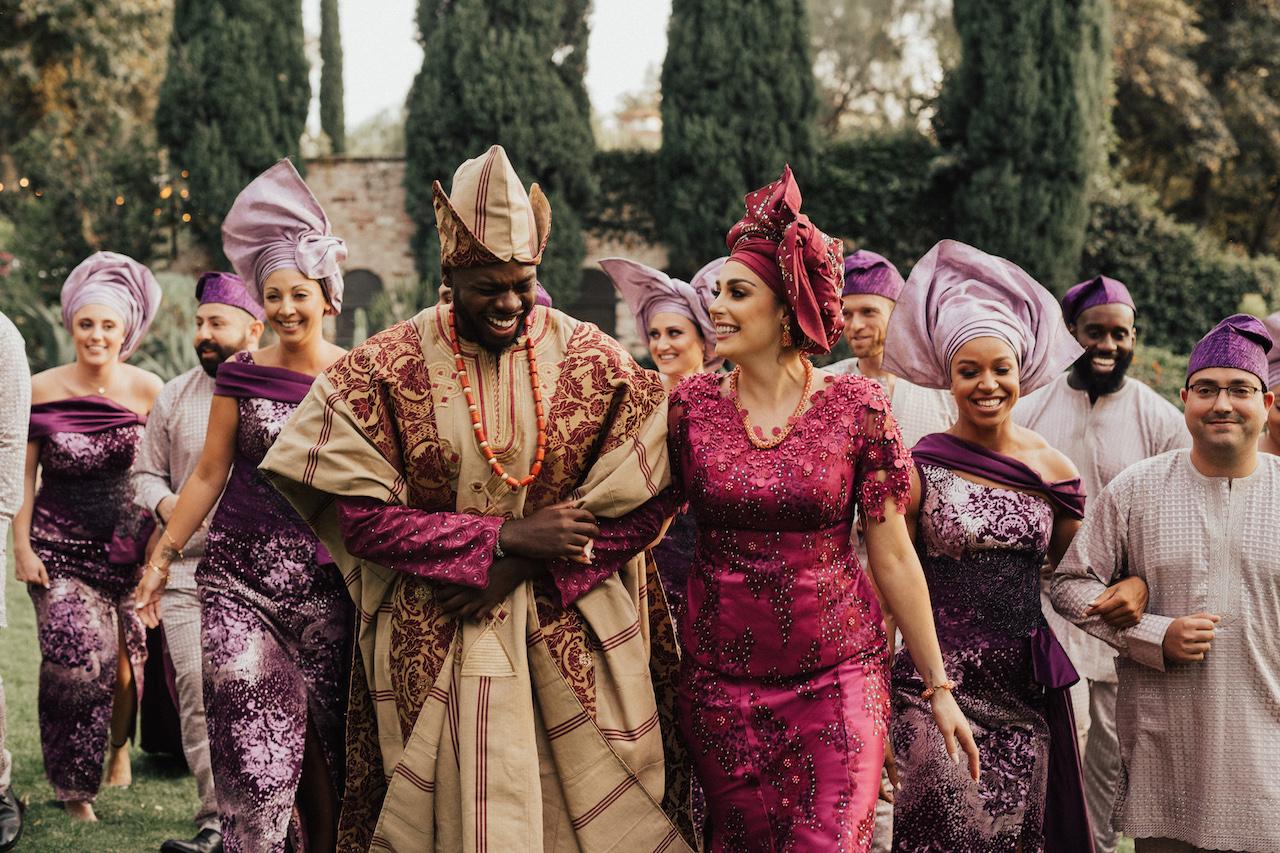
Yoruba, Igbo, or Hausa-Fulani? How Nigeria's Three Largest Traditional Weddings Actually Differ
Idana, Igba Nkwu, and Kamu/Fatiha are three genuinely distinct traditions, not regional variations on one Nigerian wedding. Here's how they compare, side by side.
Read moreKenya's Weddings Aren't One Tradition — They're Dozens. Here's a Guide to the Major Ones
There's no single "Kenyan wedding." With over 40 distinct communities, the Kikuyu ngurario, Luo dowry customs, and Maasai ceremonies are each their own tradition.
Read moreLobola, Umembeso, Umabo: Understanding a Zulu Wedding's Three Stages
A Zulu marriage typically moves through three distinct stages before it's considered complete. Here's what each one means, in order.
Read more