Published June 2026
From Agbada to Kente: A Guide to Traditional Wedding Attire Across Africa
Traditional wedding attire across African cultures tends to get treated, especially in international media, as simply "colourful" or "vibrant" — true, but it skips past the fact that most of these outfits carry specific cultural meaning, materials, and rules. Here's a closer look at a few, kept distinct rather than blended into one generic idea of "African wedding fashion."
Yoruba: aso-oke, agbada, and gele
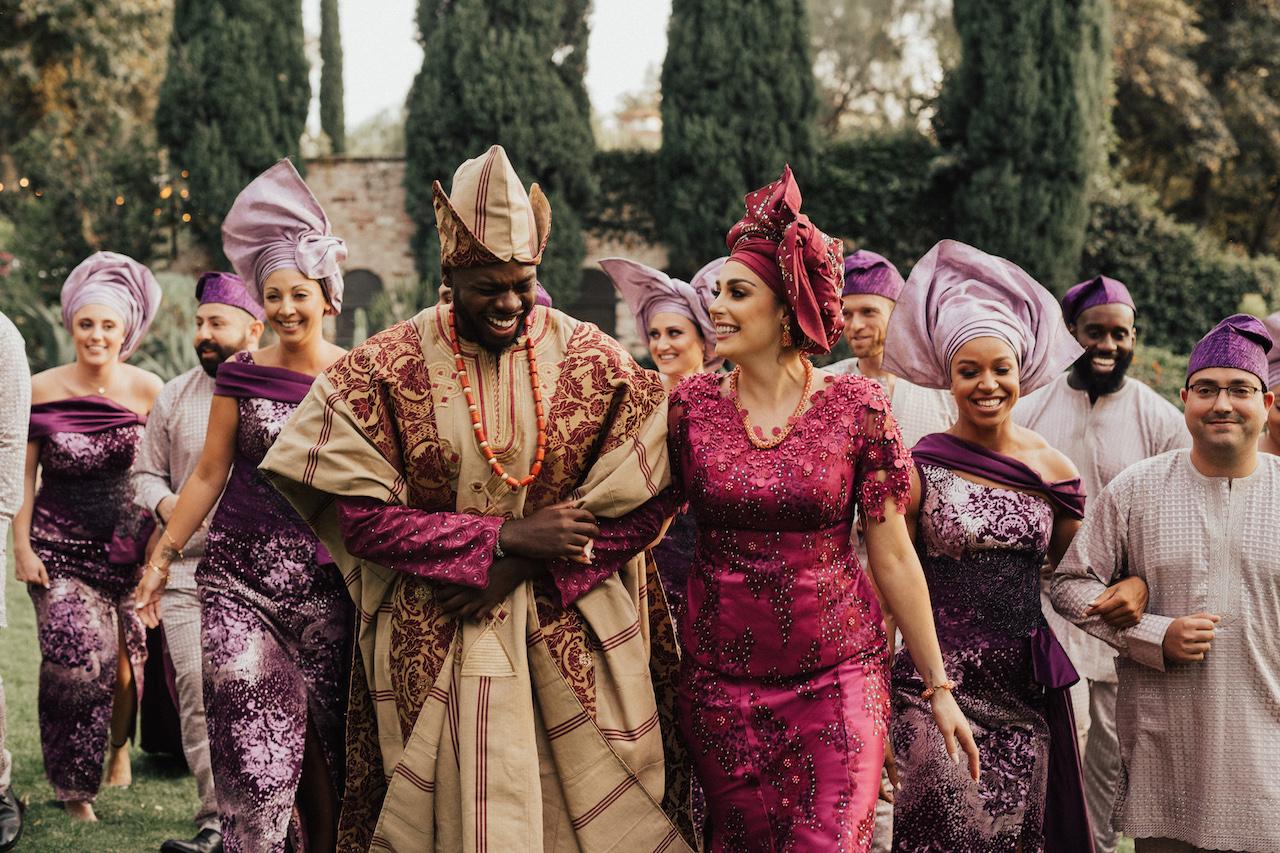
Yoruba brides traditionally wear aso-oke, a hand-woven cloth, often as a veil lifted by the groom during the ceremony, paired with an elaborate gele headwrap. Grooms wear an agbada — a flowing, wide-sleeved gown — with a fila cap. Guests and extended family typically coordinate in asoebi, matching fabric chosen specifically for that wedding, which functions as a visible marker of who's closely connected to the couple.
Akan (Ghana): kente cloth
Kente, originating with the Asante people, is arguably Africa's most internationally recognised traditional cloth — but within Ghana, the specific colours and patterns chosen for a wedding are rarely arbitrary; they typically carry meaning tied to the families or the occasion. Couples generally wear matching kente during the traditional engagement specifically, distinct from whatever they wear at the white wedding that may follow.
Zulu: the bride's blanket and isidwaba
A Zulu bride's traditional wedding attire includes an isidwaba, a leather skirt, along with beadwork, and a blanket given to her by her mother that she wears as she leaves her family home for the last time as an unmarried woman. Each element of beadwork and dress in Zulu tradition can carry its own symbolic meaning, tied to status, region, or family.
Kenya: attire that varies as much as the customs do
Given how much Kenyan wedding customs vary by community, it's no surprise attire does too — Kikuyu traditional wear historically included animal skin adorned with beads and cowrie shells, while Maasai wedding attire is known for its distinctive, intricate beadwork patterns specific to that community. As with the customs themselves, there's no single "Kenyan" traditional outfit.
Why this matters beyond aesthetics
If you're attending a wedding outside your own culture, traditional attire is one of the clearest signals of what's expected of you as a guest — whether asoebi coordination is part of the invitation, whether certain colours are reserved for family, or whether the dress code differs sharply between the traditional ceremony and any white wedding that follows. When in doubt, asking the couple or a close family member directly is always better than guessing, and it shows the kind of respect these traditions are themselves built around.
Keep Reading
Related Stories
Bride Price Across Africa: What's Actually Expected, Country by Country
Cattle, cash, kola nuts, blankets — bride price takes a different form in nearly every African culture. A side-by-side look, without flattening the differences.
Read moreLace, Aso-Oke, and Sequins: An Honest Guide to Nigerian Bridal Fabric Choices
Choosing bridal fabric in Nigeria isn't just about look — it's about climate, occasion, and how the fabric actually performs across a multi-event wedding day. Here's a practical breakdown.
Read moreYoruba, Igbo, or Hausa-Fulani? How Nigeria's Three Largest Traditional Weddings Actually Differ
Idana, Igba Nkwu, and Kamu/Fatiha are three genuinely distinct traditions, not regional variations on one Nigerian wedding. Here's how they compare, side by side.
Read more